
FRoST Takes Third Place at FHNW Rover Träff 2026 with EROS
FRoST Takes Third Place at FHNW Rover Träff 2026
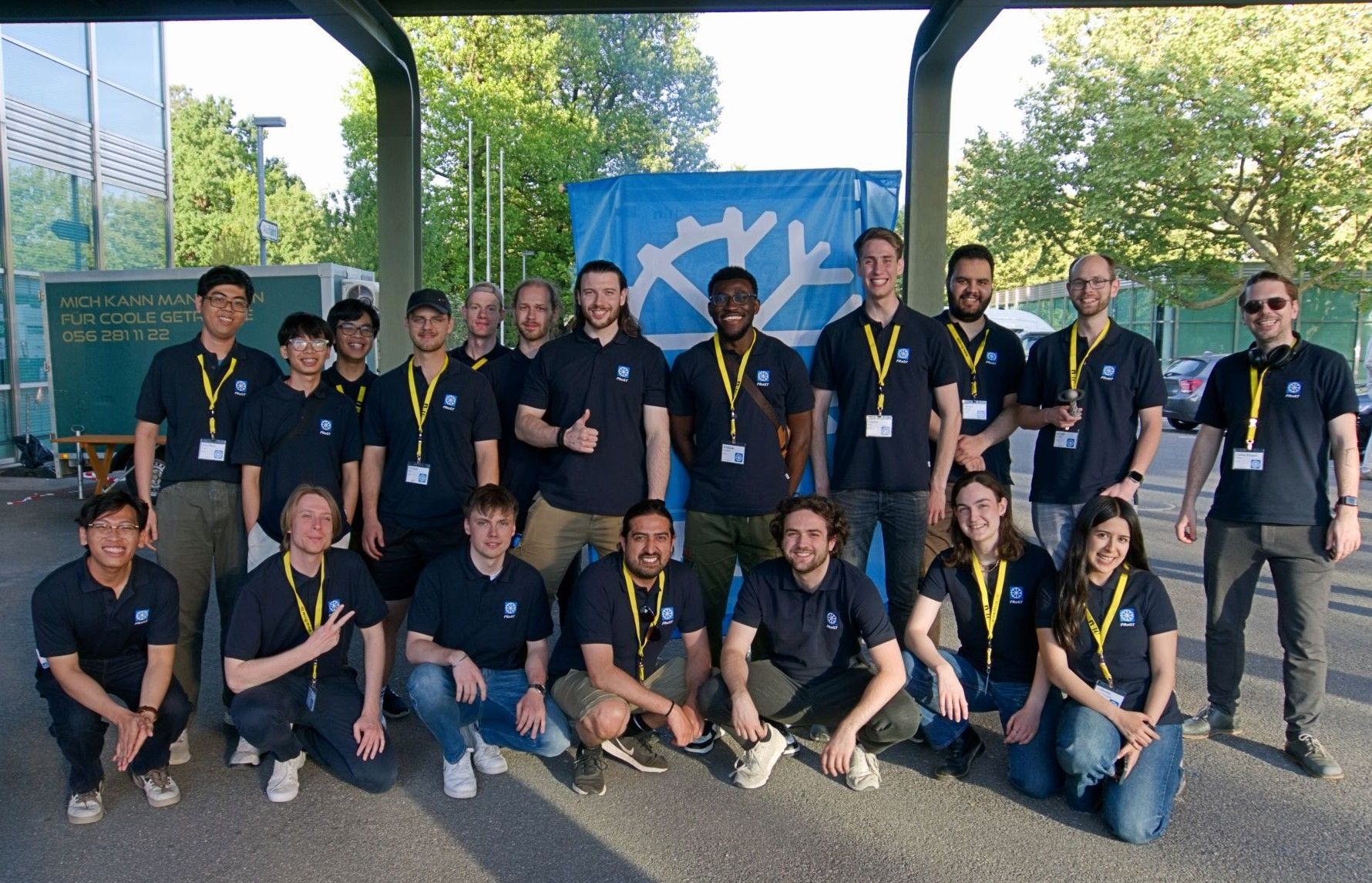
Switzerland – May 15, 2026. The Frankfurt Robotics Science Team (FRoST) from Frankfurt University of Applied Sciences secured third place at the FHNW Rover Träff 2026, competing for the first time with their newly developed rover EROS.
Seven teams from Swiss, German, and Italian universities took part in this year’s event, which tests engineering creativity, innovation spirit, and teamwork through a series of realistic Mars analogue missions.
A New Rover, A New Direction
EROS marks a significant shift in FRoST’s platform design. Unlike the team’s previous tracked rover ARES, EROS uses a four-wheeled layout in which each wheel can be individually driven and steered. “The biggest change compared to last year is our rover EROS’s chassis,” explains team lead Jeldrik Schröer. “EROS stands for Extreme Research and Observation System. With it, we’ve moved away from the tracked chassis that has been with FRoST since the very beginning, across several rover generations.”
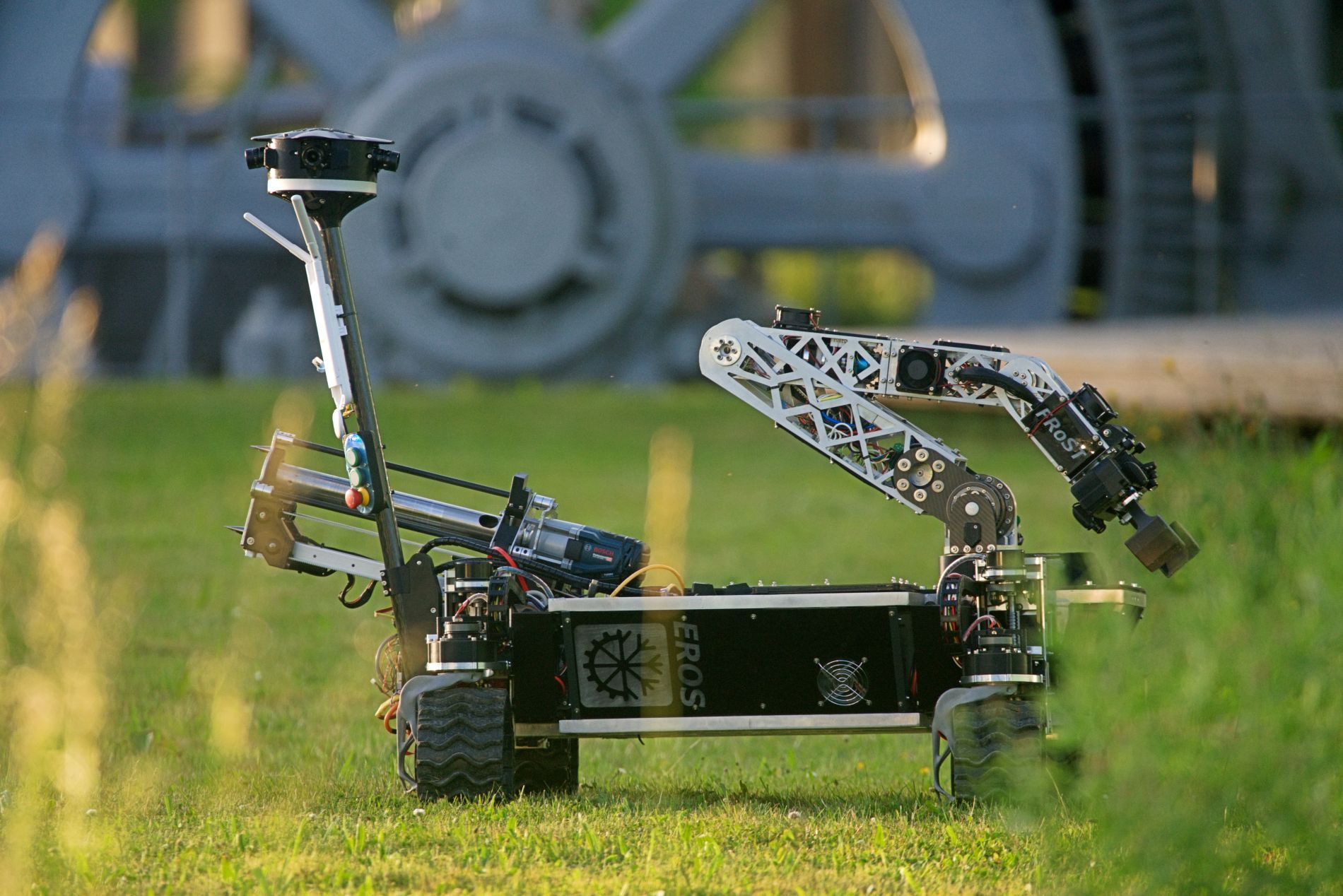
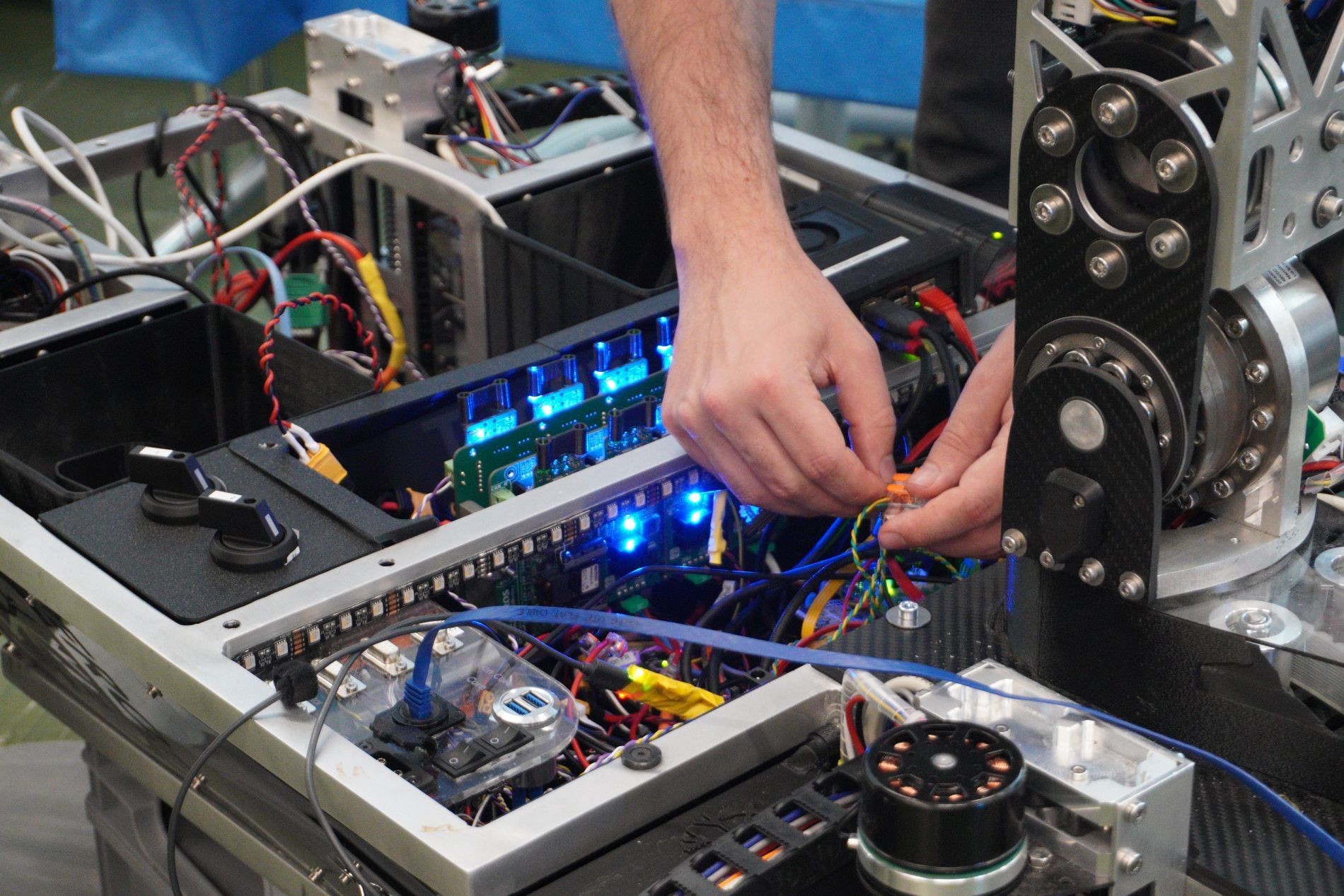
This design improves terrain adaptability and enables more precise manoeuvring. “The wheels also allow for height adjustment, so the rover can adapt to the terrain,” Schröer adds. The rover was largely fitted with new electronics and software, while central components such as the robotic arm and drill unit were carried over from the predecessor model, ARES.
Competing with a brand-new platform introduces inherent risk, and finishing third in EROS’s competition debut reflects both the rover’s capability and the team’s ability to develop and operate a new system under pressure.
Competition Tasks
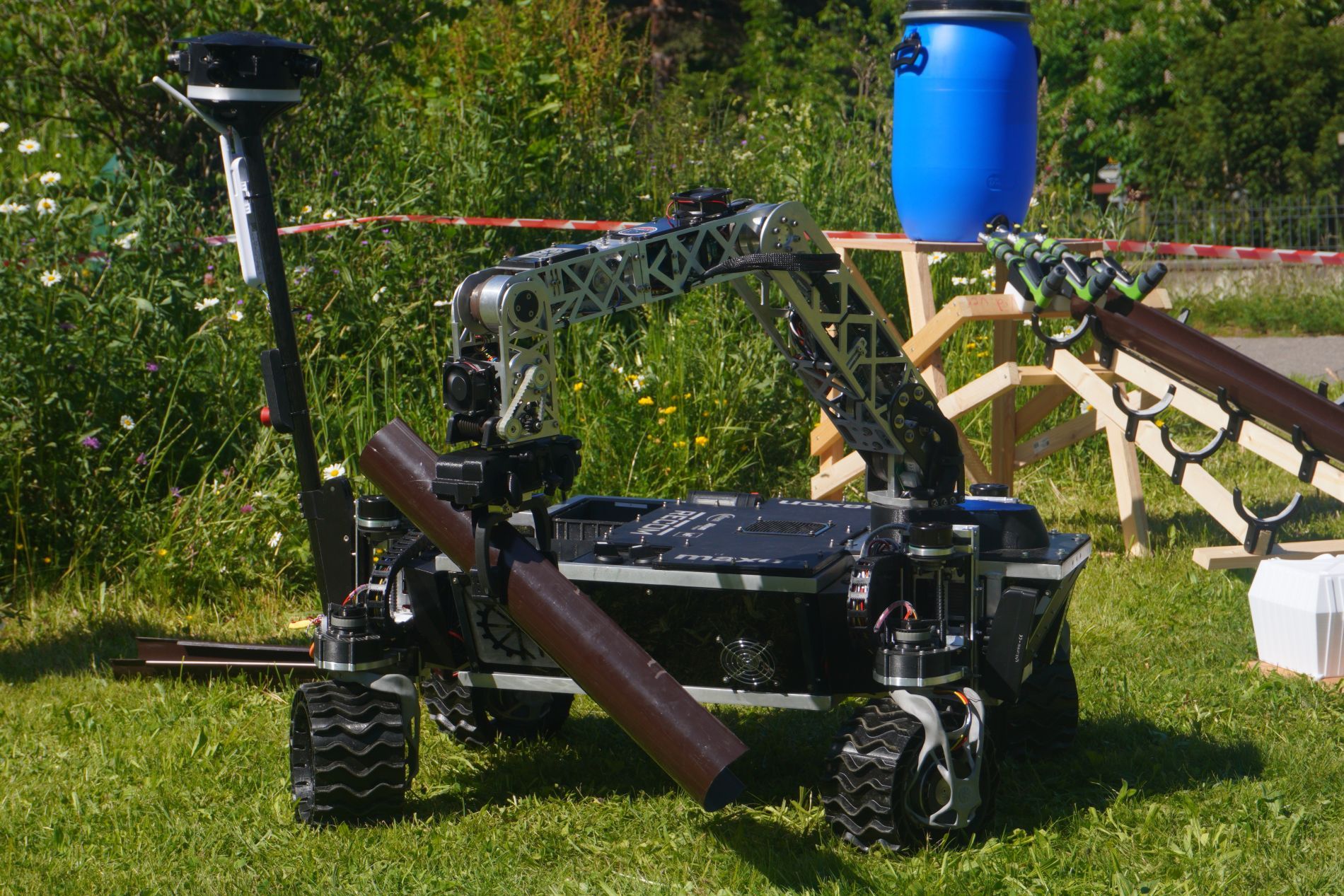
Teams completed a set of missions simulating planetary exploration scenarios, with terrain traversal as a decisive factor throughout. Tasks included autonomous navigation, maintenance operations, and sample collection. One task required two teams to collaborate in repairing a simulated space station water supply system, testing coordination alongside technical skill.
Final Rankings
| Place | Team | Institution |
|---|---|---|
| 1st | FHNW Rover Team | FHNW |
| 2nd | EPFL Xplore | EPFL Lausanne |
| 3rd | FRoST | Frankfurt UAS |
| 4th | WARR | TU Munich |
| 5th | ERIG | TU Braunschweig |
| 6th | ProjectRED | University of Modena |
| 7th | STAR Dresden | TU Dresden |
Looking Ahead
FRoST is targeting qualification for the European Rover Challenge 2026, taking place in Krakow, Poland in September. The result at Rover Träff 2026 provides valuable real-world testing data for EROS ahead of that event. At ERC 2026, EROS will be joined by FRoST’s new aerial platform, DAEDALUS, flying alongside the rover for the first time as a coordinated ground-and-air system.
New Members Welcome
Prof. Dr. Karsten Schmidt, head of the Mechatronics and Robotics master’s programme, founded FRoST with students in 2018. The team is still looking for motivated students from any degree programme who want to bring their technical and organisational skills to the project. Interested students can get in touch.
FRoST is a student-run robotics team based at Frankfurt University of Applied Sciences, competing internationally in Mars rover analogue challenges since 2019.